
 CLICK TO CALL
Dental Health Blog | Vellore Corners Dentistry
Do I Need a Dental Filling? Signs of a Cavity and What to Expect
August 24, 2026 / Dentistry
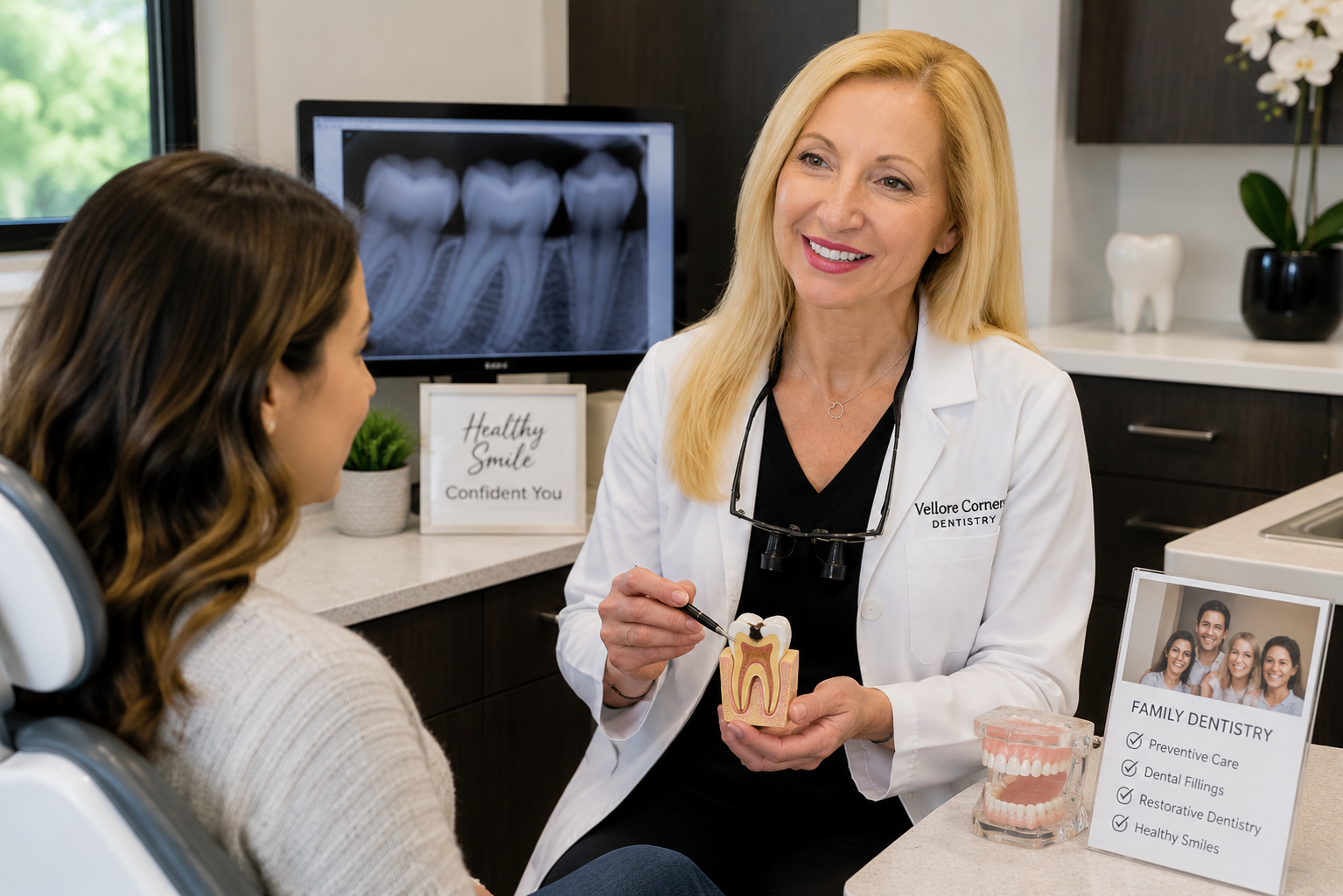
If you’ve noticed tooth sensitivity, a small spot on a tooth, discomfort when eating, or a filling that no longer feels quite right, you may be wondering if you need a dental filling.
The short answer is that only a dentist can determine whether a filling is needed. Symptoms can point to a possible problem, but they don’t tell the whole story. A dental examination can identify tooth decay, assess the condition of an existing filling, and determine whether a filling or another approach may be appropriate.
Dental fillings are a common part of general dental care. At Vellore Corners Dentistry, they may be used to repair teeth affected by cavities or certain types of minor damage. You can learn more about fillings as part of our family dentistry services in Woodbridge.
What Is a Dental Filling?
A dental filling is a material used to repair a tooth after decay or certain types of damage have affected its structure. The dentist removes the damaged portion of the tooth and fills the area with an appropriate restorative material.
The purpose is to restore the affected area rather than simply cover up a symptom. The type of filling material and the treatment approach depend on the tooth and the extent of the damage.
Not every toothache means you need a filling, and not every cavity is treated in exactly the same way. An examination is needed to understand what is happening inside and around the tooth.
Signs You Might Need a Dental Filling
Some cavity symptoms are easy to notice, while others may not cause any discomfort at all. That’s one reason regular dental examinations matter, even when your teeth feel fine.
Possible signs that a tooth needs assessment include:
- Tooth sensitivity: You may notice a sharp or uncomfortable sensation when eating or drinking something hot, cold, sweet, or acidic. Sensitivity can have several causes, so it doesn't automatically mean there is a cavity.
- Toothache or discomfort: Pain that persists, returns, or becomes noticeable when biting or chewing is worth discussing with a dentist.
- Visible changes: A dark spot, pit, hole, or change in the appearance of a tooth may warrant an examination. Some areas of decay, however, aren't visible without dental imaging.
- Food getting caught: If food repeatedly becomes trapped in one particular area, there could be a change in the tooth's shape or the space between teeth that needs to be assessed.
- A chipped or worn area: A small damaged area may sometimes be repaired with a filling or another restorative treatment, depending on the tooth and the nature of the damage.
- A loose or damaged filling: An existing filling can become worn, chipped, or loose over time. A dentist can assess whether it needs repair, replacement, or another form of treatment.
None of these signs confirms that you need a filling. They are reasons to have the tooth examined.
Why a Dental Exam Matters Before Treatment
It can be tempting to assume that a sensitive tooth is a cavity, especially if you've experienced dental decay before. But tooth sensitivity can have other causes, and some cavities don't produce noticeable symptoms in their early stages.
During a dental examination, the dentist can look for signs of decay and examine the condition of the tooth more closely. Dental X-rays may also be recommended when additional information is needed.
An assessment can answer questions that symptoms alone can't, such as how extensive a problem is and whether the tooth may be suitable for a filling.
If you have an old filling that feels different, don't automatically assume it needs to be replaced. A dentist can examine the restoration and surrounding tooth before recommending what should happen next.
What Happens During a Dental Filling Appointment?
If an examination confirms that a filling is appropriate, your dentist will explain the procedure before treatment begins.
Examining the Tooth
The dentist first confirms which tooth needs attention and assesses the affected area. They may also review any dental images that have been taken.
Preparing the Area
The area is prepared so the dentist can access the damaged portion of the tooth. Local anaesthetic may be used depending on the tooth and the treatment being performed.
Removing Decayed Tooth Structure
If decay is present, the affected tooth structure is carefully removed. The area is then cleaned and prepared for the filling material.
Placing the Filling
The filling material is placed into the prepared area and shaped to restore the tooth. The dentist checks the restoration and makes any necessary adjustments.
Checking Your Bite
Before you leave, the dentist may check how your teeth come together and make any necessary adjustments to the restoration.
The exact process can vary depending on the tooth, the extent of the damage, and the type of restoration being used.
What If the Cavity Is Too Deep for a Filling?
A filling isn't appropriate for every cavity. If decay has progressed deeply into the tooth, there may not be enough healthy tooth structure for a simple filling to provide the type of restoration needed.
In that situation, your dentist may discuss another treatment option. The appropriate approach depends on how much of the tooth is affected and whether the inner structures of the tooth have been involved.
This is another reason not to rely on symptoms alone. A tooth can sometimes have significant decay without causing obvious pain, while a relatively minor problem can be quite sensitive.
Your dentist can explain what they find during the examination and discuss the available options with you.
How to Care for Your Tooth After a Filling
Once a filling has been placed, maintaining good oral hygiene remains important. Brush regularly with fluoride toothpaste and clean between your teeth as part of your usual dental care routine.
Pay attention to how the tooth feels. If you experience ongoing or unusual discomfort after treatment, contact your dental office so the tooth can be assessed.
Good daily oral care and regular dental examinations also play a role in preventing new areas of tooth decay. If you're looking for practical ways to prevent cavities, Vellore Corners Dentistry has additional information available.
Frequently Asked Questions About Dental Fillings
Does tooth sensitivity mean I need a filling?
Not necessarily. Sensitivity can have several possible causes, including tooth decay, gum recession, enamel wear, or other dental concerns. A dentist can examine the tooth and determine what may be causing the sensitivity.
Can a small cavity heal on its own?
Some very early changes to tooth enamel may be managed through preventive care and monitoring, depending on the circumstances. Once a cavity has progressed to the point where tooth structure has been lost, however, it generally cannot simply grow back. Your dentist can determine what stage the affected area has reached and whether preventive or restorative treatment may be appropriate.
Does every cavity need to be filled right away?
Not every area of early tooth decay is treated in exactly the same way. The decision depends on the extent and location of the decay and other factors identified during an examination. Your dentist can explain whether monitoring, preventive care, or restorative treatment is appropriate.
How do I know if an old filling needs to be replaced?
A filling may need assessment if it becomes loose, chipped, damaged, uncomfortable, or if decay develops around it. Sometimes a problem with an existing filling is identified during a routine examination before you notice any symptoms yourself.
Talk to Vellore Corners Dentistry About Dental Fillings in Woodbridge
Tooth sensitivity, a suspected cavity, a chipped tooth, or a loose filling doesn't necessarily mean you need a dental filling. The right next step is an examination so the condition of the tooth can be assessed and your options explained.
Vellore Corners Dentistry provides general and family dental care in Woodbridge, including dental fillings as part of its family dentistry services. If something about a tooth has changed or you're concerned about possible tooth decay, contact Vellore Corners Dentistry to arrange an assessment.
Getting a dental concern checked can give you a clearer understanding of what's happening and what, if anything, needs to be done next.